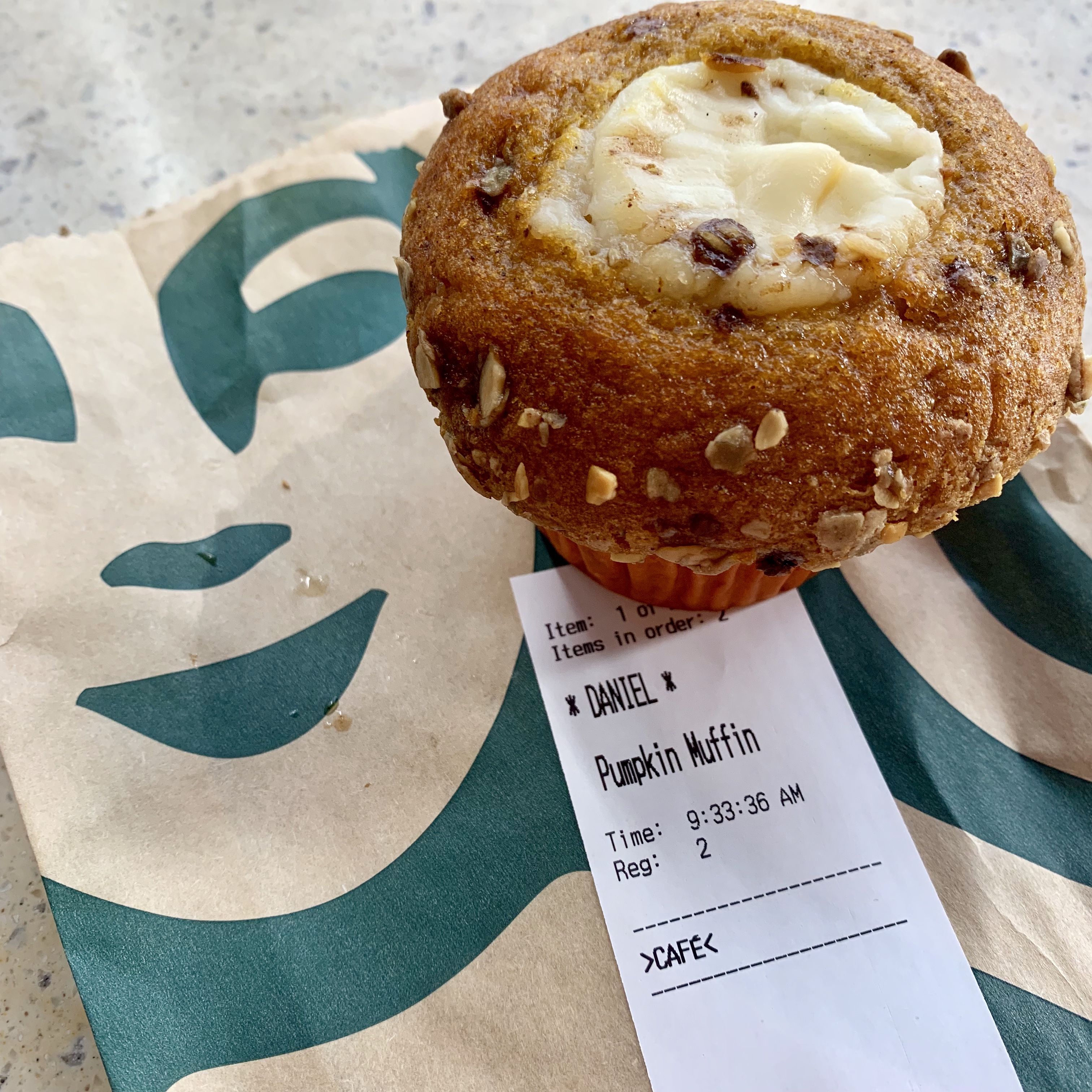
I sit here this early morning not as happy as I have felt in new year’s past. I ended 2012 more in debt than I have been in a decade, having taken on student loans in pursuit of my master’s degree. My mother died on October 26th. My husband is still disabled and still unemployed, and I ended the year with a cold/flu/who-knows-what that lasted two weeks. I made less money than in the previous nine years. Yet… my husband and I are still together, and our love is one year longer, deeper, and stronger. I completed all the courses for my master’s degree. I taught at Phoenix College again for the first time since 2005. I presented at the Registry of Interpreters for the Deaf Region V conference for the second time and I presented at the Conference of Interpreter Trainers for the first time. I traveled to Minneapolis to teach workshops. I took another cruise and visited New York again. Although my mom is dead, I still have my dad, and my husband Andy & I still have our two dogs and a new member of our family, my mom’s cat Callie. We re-elected Barak Obama. Still… we’ve fallen off the fiscal cliff. More lunatics are arming themselves with military grade weapons and killing innocent people, including children. Senseless wars still rage around the world. Global warming is causing more natural disasters. Okay, stop me now. Point is, 2012 was not my favorite year, but it could have been worse.
Category Archives: Reviews
Where are the sign language interpreter blogs today?
I began writing this website in 1996, and when I turned it into a blog in 2006 I searched the blogosphere and I found some other ASL interpreter blogs. Back then, two of the four blogs I found were inactive, and since then, the other two have become inactive.
Today, things are different. While I have continued to publish my posts about interpreting for the deaf and various topics, other blogs have emerged and thrived. Here are four that I am aware of:
- Filipino Deaf from the Eyes of a Hearing Person: Issues, activities, experiences and technologies about Deaf People in the Philippines. This blog has been active since March 2007. Jojo, the blogger, offers a perspective slightly different from American Sign Language interpreters’— yet there are more similarities than differences between American and Filipino interpreters for the Deaf. Well worth checking out.
- Reflexivity: Interpretations by Stephanie Jo Kent: From critical thinking to responsible action. This is an active blog, quite scholarly, by a woman working on her PhD who is an interpreter, researcher, speaker, etc. It is an insightful and eclectic blog.
- Street Leverage: Amplifying the Voice of the Sign Language Interpreter. I just found out about this blog last week, and I could not remember the name of it. The domain streetleverage.com doesn’t help me remember that it’s an interpreter blog, but then I suppose neither does danielgreene.com.
They make up for their domain name by putting “Sign Language Interpreter” or “Sign Language Interpreting” in all of their post titles. Street Leverage has only been publishing for six months now—since August 2011—but their contributors are well-known in the sign language interpreting community, including: Anna Witter-Merithew, Dennis Cokely, Carla Mathers, Brandon Arthur, Wing Butler, and Antonio Goodwin. I have met each of these authors through work and workshops, and I know they know their stuff. Street Leverage is only about sign language interpreting, so combined with their contributors, they have both credibility and focus. - Thoughts from a Sign Language Interpreter. The blog’s author, Jon Barad, just informed me of his blog this morning in a comment to my post called Where are the interpreter blogs?. He started his blog in June 2011, eight months ago. So far he has six posts, well written, from a business and professional practice perspective. Definitely another blog to watch.
If you know of any other blogs, I would be happy to blog about them!
Where are the interpreter blogs?
When I first turned danielgreene.com into a blog in 2006 I asked the question Where are the ASL interpreters blogs? and found only a few. Since I’ve been in grad school for “interpreting studies” with a concentration in teaching, I’ve learned about and sought out other interpreter blogs—not ASL interpreter blogs, but interpreter blogs nonetheless. Here are two:
- The Interpreter Diaries: Smart, academically informed blog about interpreter training and professional practice. I have been following this blog for a few months now.
- The Liaison Interpreter: I just found this blog today, and the most recent post is from today, so it is current. I checked the archives, and it seems the blogger has been quite active since 2007, publishing an average of 175 posts per year— much more active than I have been! This is a blog I am going to give a good viewing.
Googling for the search terms ‘interpreter’ and ‘blog’ just now, and I found something I have seen before: an interpreter blog gone dry. In The Court Interpreter blog, there is a post (only one of four) called Reworking the blog that reads:
You may have noticed I deleted all of my earlier posts.… A lot of what I wrote in the past about interpreting was sophomoric and offensive and this time around my focus is going to be on entertaining and informing the public without compromising myself professionally. (The Court Interpreter)
I mean no disrespect in citing this example; I mention it because it shows how hard it is for interpreters to blog about their work. This is understandable! We deal with many frustrations, challenges, and ethical dilemmas that are hard to talk about publicly without breaking confidentiality. The Court Interpreter’s last post was written on February 24, 2011— almost a year ago today. Let’s take a closer look… that last post, Now tweeting, or twittering, or whatever you call it. I checked out Court Interpreter’s Twitter feed, and indeed, they have microblogged actively since switching to Twitter. So, it may be a loss to the blogosphere, but their voice is still out there— 140 characters at a time.
That is all for now. Believe it or not, this post took me an hour-and-a-half to write, and it’s now 11:30 PM. Slow writer, I guess. How about you? Are you an interpreter/blogger? Do you know of any good interpreter blogs to read? I would love to hear from you.
Rave Review for my Vague Language Workshop
I was honored that a participant in my Vague Language (VL) workshop for ASL interpreters was moved to write this review for our local chapter of the Registry of Interpreters for the Deaf (Arizona RID). The writer wishes to remain anonymous, but I found out who they are and got their permission to publish their review on my website. I assure you that this review was entirely unsolicited and is reprinted here in the writer’s original words. Here it is!
It was all about vague language of course which has really been brought to light, I think, by video relay interpreting but certainly applies to the work we do in education. It is a fairly new topic in linguistic studies too. It is the concept that people do use vague and unspecific language in their everyday interactions and often it is for a purpose that they are being vague. This brings up the question, do we as interpreters then clean it up and make it clear, do we interrupt the conversation to get clarification, or do we just render the message as vague as it was given? Keep in mind it might be the person’s goal to be vague.
For example: a teenager might wish to cover up the truth to avoid getting in trouble; a teacher might wish to protect a student’s feeling when giving feedback about work; a person might just be trying to be polite in their use of words; a doctor might wish to be less direct about a person’s life expectancy; a counselor might purposely need to ask an open ended question without leading the client with examples. How much of this can and should an interpreter try to clarify?
This was the first time I had photographed a presenter giving a workshop in sign language. Those who know American Sign Language (ASL) can guess what Dr. Dennis Cokely was talking about. Those who don’t know ASL– well, they can have even more fun guessing. I don’t want to give away the content of his workshop to those who know ASL; rather, I encourage them to take his workshop themselves! As for those who don’t know ASL, there would be so much lost in translation if I simply said, “Dr. Cokely is signing X,” that I would be guilty of oversimplifying his message. And his workshop “Interpreting Culturally Rich Realities” is all about not oversimplifying any interpretation! I thank Dr. Cokely for his permission to photograph him as he worked.
While I don’t want to give too much of his workshop away, I do want to use these photos to help myself and others who took his workshop recall some of this repeated points. One of the things Dr. Cokely repeatedly discussed was having multiple lexical items in one’s “mental files” to choose from when confronted with signs or words that represented “culturally rich realities,” or words that are not easily conveyed from one culture/language to another in a 1:1 ratio.
As a photographer of a speaker presenting in ASL, I used the textual analysis and predictive skills I’ve developed as an interpreter to study Dr. Cokely’s rhetorical devices so that I would be prepared with my camera to capture him at the very moment when he would repeat one of his themes. As an instructor, he was very deft at using repetition to drive home a point.