Blog Archives
Update on my thesis on VL in ASL
I am working on my master’s thesis on vague language (VL) in American Sign Language (ASL). As far as I know, not much has been published about vagueness in ASL and nothing has been published about “VL” in ASL aside from my article in the RID Views. For my thesis, I’m doing a literature review of what has been written about VL in world languages and vagueness in ASL— even if the topic of the publication wasn’t “vagueness” per se. After a review of the literature, I will contribute a description of at least one aspect VL in ASL. My goal is to help ASL-English interpreters recognize VL and interpret it faithfully to serve the communication goals of deaf and hearing consumers.
If you know of any literature about VL in ASL—or any type of vagueness in ASL—please comment here or contact me. Thanks!
Are most ASL interpreters working in their C language?
[I began writing this as a comment to C is for… – The Interpreter’s Languages (Part II), a follow-up to Learning your ABCs – The Interpreter’s Languages (Part I)— both posts from the blog The Interpreter Diaries. The comment got so long, though, I decided to make it a post on my own interpreting blog. So, here we go.]
The American Sign Language interpreting profession has a lot of catching up to do to bring it on par with foreign language interpreting international conference interpreting. I would venture to say that most ASL interpreters are working not only from but also to their “C language.” You have to understand that until the ’60s and ’70s, there was no ASL interpreting profession, and those who interpreted for the deaf were usually family, friends, or neighbors. Deaf people counted themselves lucky to get anyone to interpret for them— free of charge, no less! Unfortunately, here we are in the 2010s and deaf people still find themselves lucky to get an interpreter to provide the service even for pay.
There is a shortage of interpreters to fulfill the demand for “qualified interpreters” required by the Americans with Disabilities Act. There are very few native hearing signers. Even those with deaf parents do not all learn the language fluently; in fact, it has been seen that one child may learn ASL fluently and the other siblings will rely on that child to interpret between them and their parents. And then, even the CODAs (children of deaf adults) who are fluent in ASL are not always as fluent in all registers of the language that they would need to be to call ASL their A language. What’s more, CODAs often have English as a B language because it is their second language. (Babies are developmentally able to learn signed languages at a younger age than spoken languages, so for many CODAs, sign language is their native language.)
To make matters worse, CODAs account for a small percentage of ASL interpreters. Most interpreters don’t learn ASL until college or high school at the earliest. I will speak for myself: I started learning ASL when I was 21. I have been interpreting for 21 years. Most people are very happy with my interpreting services, but I by no means possess native-like fluency in ASL! I always have to work on my fluency, and I honestly don’t know if my ASL will ever be even good enough to even call it my “B language.” And, if I may venture to say so, I am by no means alone in this.
In my defense—and so as not to be so hard on my colleagues—the ASL interpreting profession is still nascent. For decades, one didn’t even have to have a high school diploma to be an ASL-English interpreter. Only a few years ago did an associate degree become a prerequisite to stand for national certification exams. All of the already certified interpreters were “grandfathered” in. As of June 2012, candidates will have to have bachelor’s degrees to sit for the national exams—and their degrees don’t even have to be in interpreting. We still have a situation in which both entrants and graduates of interpreter training programs do not possess the fluency in ASL required to be an interpreter. Things are getting better, but we have much work to do.
Consider, finally, one last thing about sign language interpreting in America: most deaf people are non-native users of ASL. Many deaf children have limited, if any, exposure to spoken, written, or signed language until elementary school! I have heard the expression “semilingual” to describe deaf people who are native in neither ASL nor English. According to your terminology, the word would be “alingual.” I think that is too strong a word, and one that Deaf people would take umbrage to because the Hearing world tells them that if they don’t have English, they don’t have “language.” Deaf people are very proud of their sign language, even the 90% of them who did not learn it from birth (only 10% of deaf people are born to deaf parents). And many deaf people who are not “native” in ASL still have what would be considered to be “native-like” fluency— better than what I and many other hearing sign language interpreters possess. All in all, though, a fair number of the deaf people we interpret for do not sign more fluently than us C language hearing people do. Deaf education and ASL interpreter education both have a long way to go. I do honor our consumers and my colleagues for doing the best that can be done given the circumstances, and I look forward to the better future we are working toward.
Reflections on ICED Apology and Abolishment of Sign Language Ban
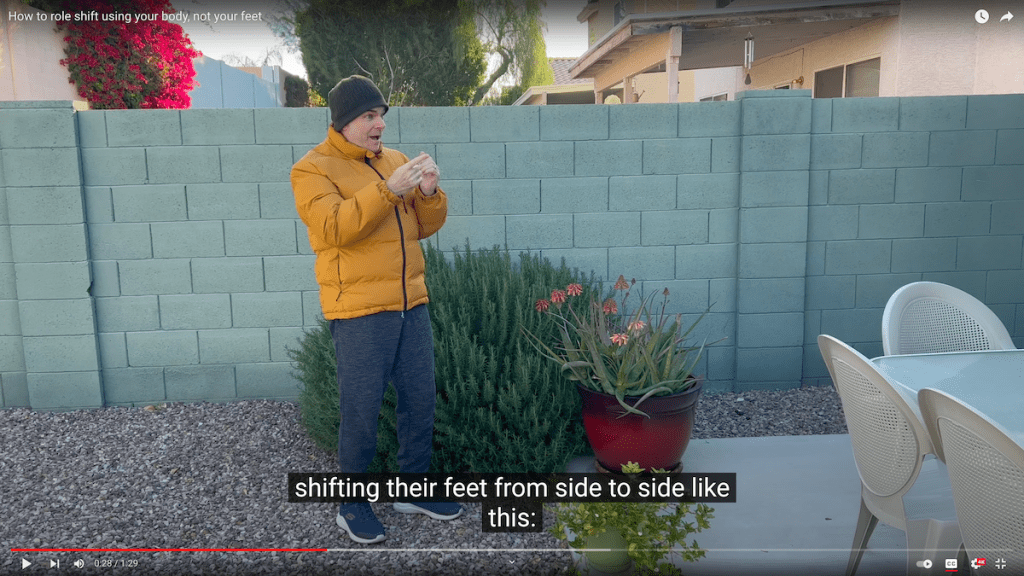
Today I saw retweet from Jared Evans about the ICED (International Congress on the Education of the Deaf) “formal apology for the Milan 1880 conference which banned signed languages in deaf education.” I believe that was the first I heard of it. This evening, I looked at the DeafRead links on the right sidebar of my blog and saw a blog post by Amy Cohen Efron about the ICED apology along with an embedded vlog she posted on YouTube:
My comment:
I think this is great. And I didn’t realize that the conference of Milan was the second quinquennial conference in a whole series leading up to today. I am glad to hear of this “gesture” though I am cautious about looking at an apology as an action. Yes, it is a step in the right direction, but Read the rest of this entry
Was Canonized Saint at Milan Conference?
When I heard last week on NPR that an Italian priest who “helped the deaf” in the late 1800s had been canonized as a saint, I couldn’t help wondering: was he at the Milan Conference of 1880, a conference of “educators of deaf-mutes” who moved to forbid sign language and mandate oralism.
Filippo Smaldone lived from 1848 to 1923 in Italy, and the infamous Milan Conference was held in 1880. According to one source, he founded “institutes for deaf-mutes” (not necessarily a disparaging term back then) in 1885 and 1887, but he had already worked with “deaf-mutes” as far back as the 1870s. He might truly be worthy of sainthood if he had rebuked the Milan Conference and promoted deaf people’s preferred mode of communication, but somehow I doubt that happened, because that would have gone totally against the grain.
Just think what an irony it would be if our dear Father Smaldone had been one of the killers of sign language and “got away with murder” by being canonized as a saint!