So it takes a genius to work a Mac? I remember when it was the computer "for the rest of us." Not a fan of the new ads. http://t.co/N3E2aBZZ
— Daniel Greene (@danielgreene) August 6, 2012
33.448377
-112.074037

Today it’s Facebook, Google+, Twitter. Yesterday it was rap groups, support groups, open mic. I don’t remember feeling like nobody cared what I had to say when I was speaking to people in person. Now that I’m writing for the Internet — for the past 17 years or so, and sharing on social media for the past six — I’m wondering if anyone cares what I have to say. I don’t think I’m alone in this. So many people are sharing so much, be it on blogs or social media, that it’s impossible for us all to take each other in. I guess some people on the Internet form communities like groups on Flickr or writers of similar blogs on WordPress. But I like the idea of sharing with the world, or should I say, being heard by people all over the world. I’d like to think that people care what I have to say, but the stats on my posts often don’t show that they do. And maybe they don’t. We can’t all care what we all have to say, can we? Maybe it’s okay to say it, though. Maybe it’s okay to journal publicly, and if someone gets something out of it, great. If not, we’ve simply made public something we would have written in a journal anyway, and there’s no reason to keep it a secret. Some say we live in a time of oversharing, and that might be true. I would like to think, though, that even if no one cares what I have to say until years from now, or even if I’m the only one who cares what I have to say, it’s worth it. I might look back on this years from now and be glad I wrote it. Someone reading this today or many days from now might take solace in it. I guess for now I’ll try not to care whether anyone cares what I have to say, and just keep saying what I have to say.
P.S. Come to think of it, when I was talking to people in person, I was talking to groups, not the world. Maybe there is something to sharing on the Internet with groups after all. What do you think? Please leave a comment below. I do care what you have to say.

I’ll say it up front: I’m tackling this because I struggle with it myself. I spent an hour last night writing a short blog post about interpreting and another two hours this morning returning to it again and again to make revisions. (And that’s after already publishing it last night, which is a no-no.) Rather than telling you what works for me, I’ve collected some articles from bloggers I hope I can learn from — and you can too.
Whew! Even that took me a half-hour. Any ideas on blogging faster?
.jpg)
Is “freelance” a setting? I’ve heard people say they used to be “educational” and now they’re “freelance.” What they mean is they used to be employed full-time at a school and now they work as an independent contractor for agencies. Yet interpreters can work full-time in schools and be “freelance” if they’re working at that school as independent contractors. By the same token, there are interpreters who work for agencies as full-time employees, and they do doctor’s appointments, business meetings — the same kinds of work as interpreters who call themselves “freelancers.” I think interpreters get their settings and specialties mixed up, and I think it can cause confusion to those entering the field, those who hire us, and even ourselves and each other. Knowing what’s what can give everyone a better understanding of what we do. Here is how I suggest we distinguish interpreting settings from interpreting specialties: (more…)
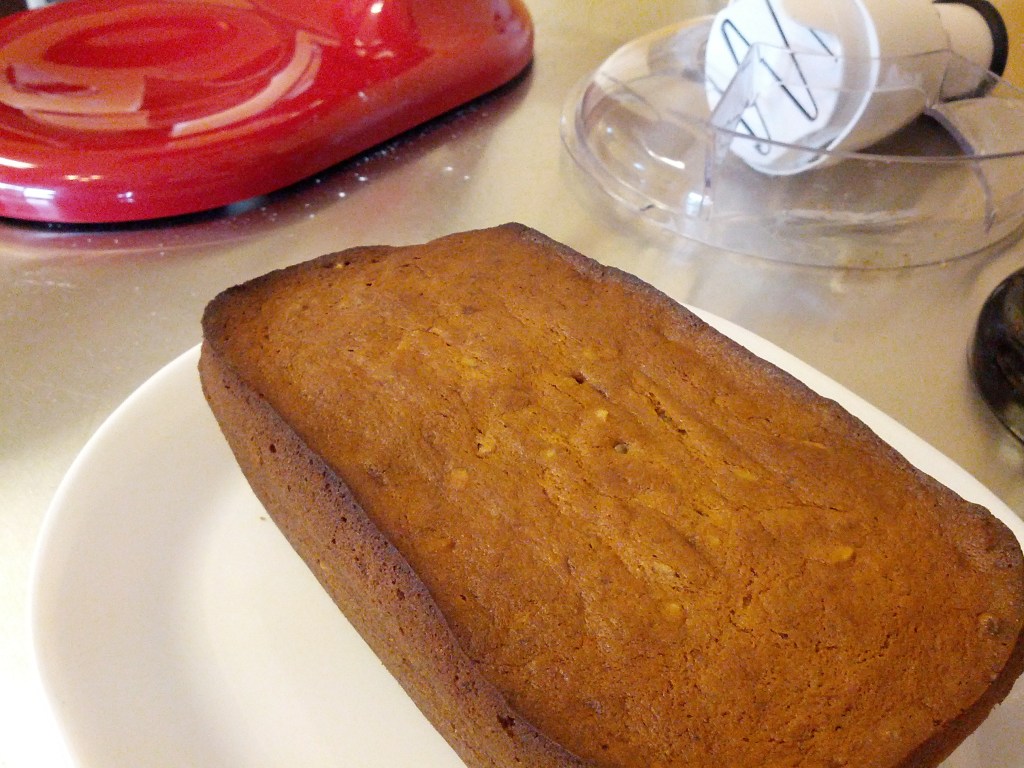
We had ripe bananas and walnuts in the house, so I decided to make banana walnut bread. I had never made it before, so I Googled for a recipe. I found and used this banana walnut bread recipe from Martha Stewart. OMG nom nom nom!
 Daniel Greene