Blog

  • How to write blog posts in less time

    How to write blog posts in less time

    I’ll say it up front: I’m tackling this because I struggle with it myself. I spent an hour last night writing a short blog post about interpreting and another two hours this morning returning to it again and again to make revisions. (And that’s after already publishing it last night, which is a no-no.) Rather than telling you what works for me, I’ve collected some articles from bloggers I hope I can learn from — and you can too.

    Whew! Even that took me a half-hour. Any ideas on blogging faster?

  • Settings vs. specializations: Categorizing interpreting work

    Interpreter Patricia Stöcklin whispers interpreting to Garry Kasparov. Klaus Bednarz is speaking on the lit.Cologne 2007 Français : L'interpréteur Patricia Stöcklin traduit en chuchotant à Garry Kasparov. Klaus Bednarz parle au lit.Cologne 2007. (Photo credit: Wikipedia)
    Interpreter Patricia Stöcklin whispers interpreting to Garry Kasparov. Klaus Bednarz is speaking on the lit.Cologne 2007 Français : L’interpréteur Patricia Stöcklin traduit en chuchotant à Garry Kasparov. Klaus Bednarz parle au lit.Cologne 2007. (Photo credit: Wikipedia)

    Is “freelance” a setting? I’ve heard people say they used to be “educational” and now they’re “freelance.” What they mean is they used to be employed full-time at a school and now they work as an independent contractor for agencies. Yet interpreters can work full-time in schools and be “freelance” if they’re working at that school as independent contractors. By the same token, there are interpreters who work for agencies as full-time employees, and they do doctor’s appointments, business meetings — the same kinds of work as interpreters who call themselves “freelancers.” I think interpreters get their settings and specialties mixed up, and I think it can cause confusion to those entering the field, those who hire us, and even ourselves and each other. Knowing what’s what can give everyone a better understanding of what we do. Here is how I suggest we distinguish interpreting settings from interpreting specialties: (more…)

  • Made the most delicious banana walnut bread

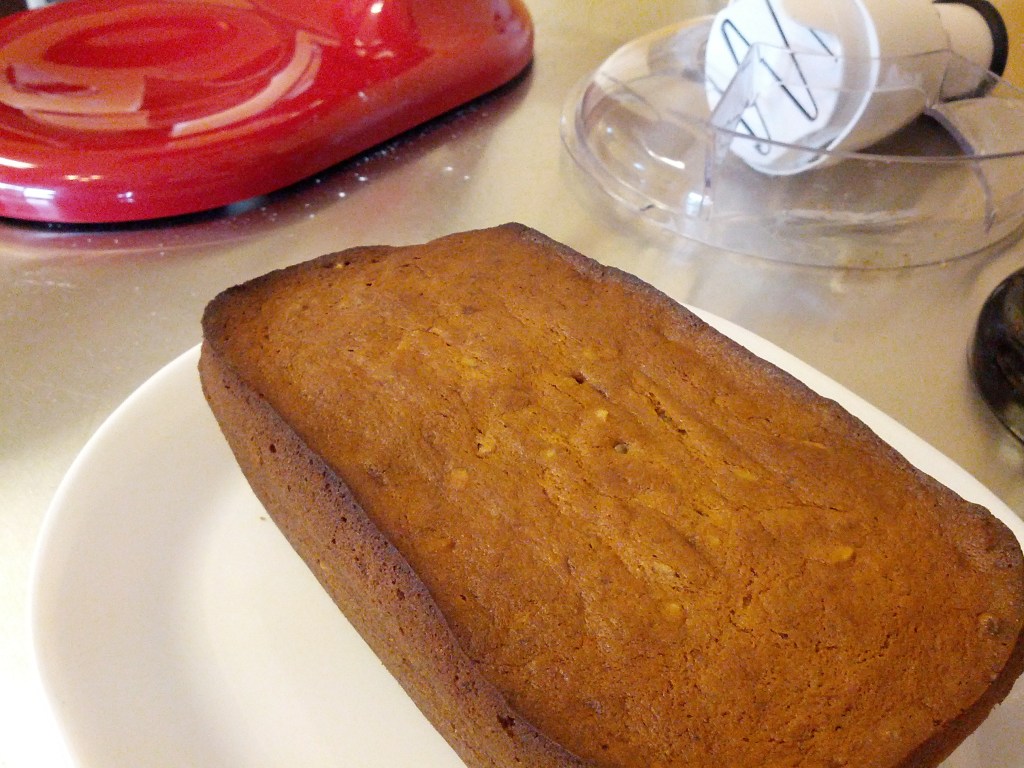
    Made the most delicious banana walnut bread

    We had ripe bananas and walnuts in the house, so I decided to make banana walnut bread. I had never made it before, so I Googled for a recipe. I found and used this banana walnut bread recipe from Martha Stewart. OMG nom nom nom!

  • My thoughts on the opening ceremonies of the Olympics

  • Mac OS 10.8 Mountain Lion: Let’s do the time warp. Again.

    Cougar / Puma / Mountain Lion / Panther (Puma ...
    Cougar / Puma / Mountain Lion / Panther (Puma concolor) closeup. Philadelphia Zoo (Photo credit: Wikipedia)

    I was unpleasantly surprised when Apple took a step backward a few years ago with their skeuomorphic Address Book, Calendar, and Notes apps — the stitched leather bindings, the yellow ruled paper, the bits of paper in the cardboard binder where the pages were torn out, the handwriting fonts, etc. Now they’ve done it again with the same apps and with the new Reminders app. I understand that a GUI has to look like something, but I don’t think it should look like ancient artifacts. Why should OS X apps look more old-fashioned now than they did the first decade of OS X? Probably because they have to match iOS, and maybe Apple made iOS so skeuomorphic because they thought that’s what they had to do to sell iPhones and iPads.

    Personally, I don’t use any of the OS X apps anymore anyway. I have all I need in the browser: Gmail, Calendar, Contacts, Tasks, Messages, etc. And they’re not so skeuomorphic. I’ll just enjoy the overall system enhancements of OS 10.8 and not do the time warp again.