(SPOILER ALERT: If you want to be surprised by everything in the movie, wait to read this until after you’ve seen it.)
As I said in a Tweet after I saw Mirror Mirror,
https://twitter.com/#!/danielgreene/status/189067921773961217


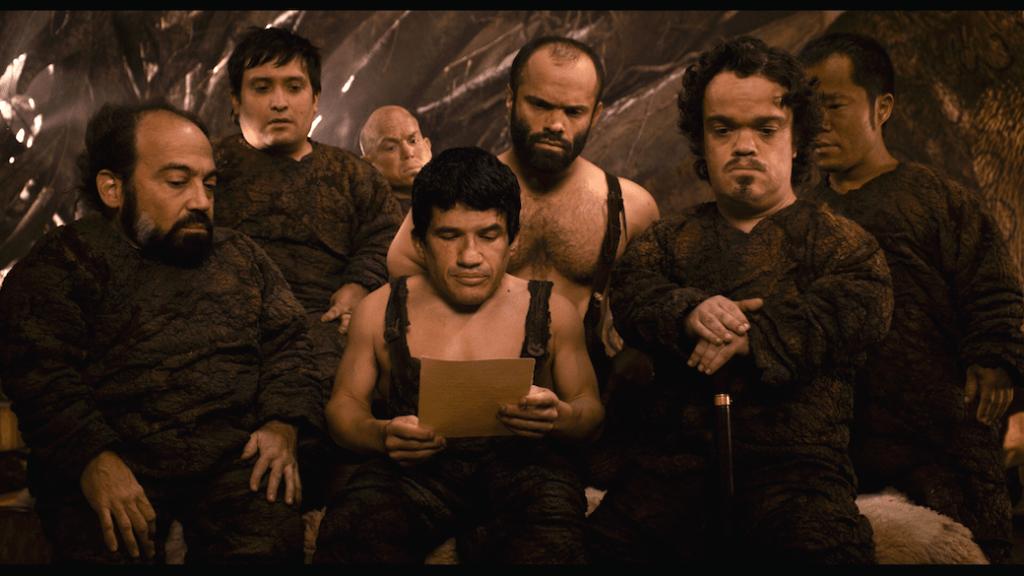
But it wasn’t just the sight of the furry Sebastian Saraceno shirtless that impressed me about the dwarfs in Mirror Mirror. What impressed was that their dwarfism (or should I say “dwarfness”?) was actually a subject deemed worth discussing in the film– both comically and dramatically. There is humor in the way they best their enemies by attacking them in stilts, making them think they are “giants” instead of dwarfs. There is melancholy in the story about how they were driven from their village when the powers-that-be banished anyone not “normal.” At the beginning of the movie, there is some manly sparring in which a tall man slings all manner of short jokes at the dwarfs, and one of my favorite lines in the movie is when one of the dwarfs retorts: “Really? After a minute that was the best you could come up with?” At the end of the film, there is a heartwarming apology in which the character who at first mocked them avows a new respect for them. It is the only Snow White and the Seven Dwarfs story I’ve seen that ever tackled the issues of normalcy, disability, shortness, tallness, paternalism, and respect. Through it all, the dwarf characters in Mirror, Mirror (all played by dwarfs) maintain more humanity than one usually sees in dwarf stereotypes. They are, in turns, sad, scared, brave, hopeful, and sportsmanly. And the dwarf actors are good. I imagine it was a combination of screenwriting, directing, and the actors’ improvisation and character development that made the characters what they are. I, for one, thought it was a step forward in cinematic depiction of people who vary from the norm. And respect for diversity is something I feel strongly about.
In my view, the fact that I found one of the dwarf actors attractive — and I’m not a dwarf fetishist — means that he is portrayed as a handsome, virile man who happens to be very short. And, regardless of whether the other dwarfs are featured as sex symbols, they are portrayed as men. Correct me if I’m wrong, but I think this is progress.
Related article
Mark Povinelli: Mirror Mirror reflects frustrating times for dwarf actors
Image Credit
Featured image courtesy Cinema Squid / Mirror Mirror (2012) [US Fox Blu-ray 2012] / Screenshot #31 / 50, I-frame @ 1:10:33.525, #101503. Retrieved from http://www.cinemasquid.com/screenshots/sets/mirror-mirror-2012-us-fox-blu-ray-2012/a3f9b432-1e2b-4d64-b37e-cde0b9df251b
 Daniel Greene