https://twitter.com/#!/danielgreene/status/177537181559169024
Tag: accessibility
-
I want a Chromebook; in fact, I want a Chromephone. Easy on the OS, and hold the apps.
The coming of the Chromebook–the web-only netbook that boots in less than ten seconds–has me thinking how nice it would be if my Android phone booted up in 10 seconds instead of 60. But if it did, it wouldn’t be an Android phone, would it? It would be a Chromephone, and that’s all right with me.
If the telephony could be worked out, I don’t see why a phone couldn’t be made to run on a thin, browser-like OS that accesses almost all its content on the Cloud. As HTML5 is helping web content become more app-like, and as more of users’ content is stored online, there may soon be little need for onboard apps at all. We may be doing everything we need with Web apps. This may be the end of the OS as we know it. No more bloated platform-dependent apps. Microsoft never was a trailblazer, and Apple isn’t blazing trails anymore, either. Apple is announcing iCloud and OS X Lion tomorrow, and I’d say they’re just playing catch up. Microsoft say Windows 8 is going to have an HTML5 panel screen instead of a desktop, and by the time it comes out in a year or so, it will be as old news as Windows 95 = Mac 84.
As someone who embraced platform-independent Web development before it was popular, I am thrilled to see that HTML and CSS have now taken us to the point where just about any app can be a Web app. Pretty soon, there won’t be a need for five different Facebook apps; there will just be Facebook as a web app anyone can use the same way on any device. You won’t have to wait for your favorite Website to come out with an app for your device’s operating system, because web standards and powerful web functionality will make the question of device and OS moot.
I’m already doing just about everything online with the Chrome browser now except for editing photos and videos and opening Office documents on my iMac. The only thing I do on my laptop other that the Net is Microsoft Office if I have to, and I’m already using that less as I use Google Docs more. I’m ready to move away from bloated software and over to something simple, fast, and standard. Chrome is the OS of today.
Related Posts
-
Google Video Shutting Down*
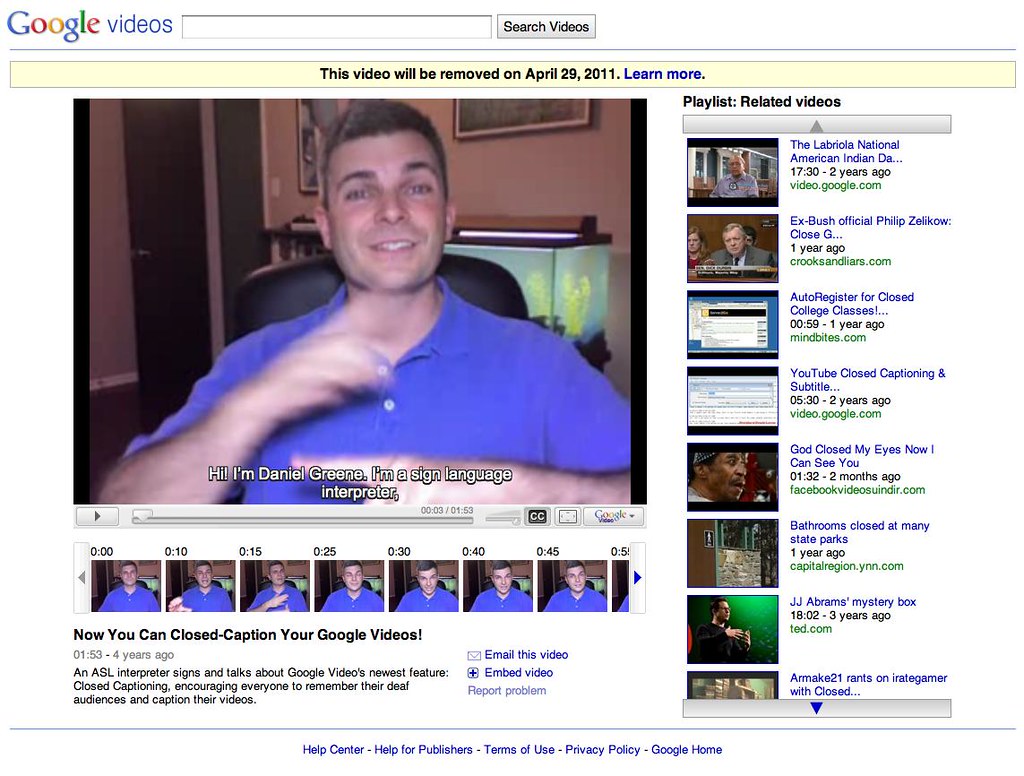
*Google Video is shutting down as a content host but will continue as a video search.
In case you ever uploaded a video to Google Video and didn’t get the memo that they’re shutting down, here’s a copy of the email from Google yesterday: (more…)
 Daniel Greene